

The Hidden Threat Inside Your Furnace Before Winter Hits
Your thermostat clicks, the blower spins up, and warm air fills the room. But beneath that familiar hum, a hidden danger might be lurking right in the center of your heating system. That strange noise or extended run cycle isn’t just an annoyance—it’s exactly Why We Inspect Heat Exchangers for Micro-Cracks Before the First Wisconsin Freeze. When you schedule a furnace service with our team at Absolute Comfort HVAC, our goal isn’t merely to verify that the unit turns on. It is a critical safety measure designed to prevent a catastrophic failure when you need your system most. If an underlying structural issue is found, prompt furnace repair can keep your family safe and your home warm.
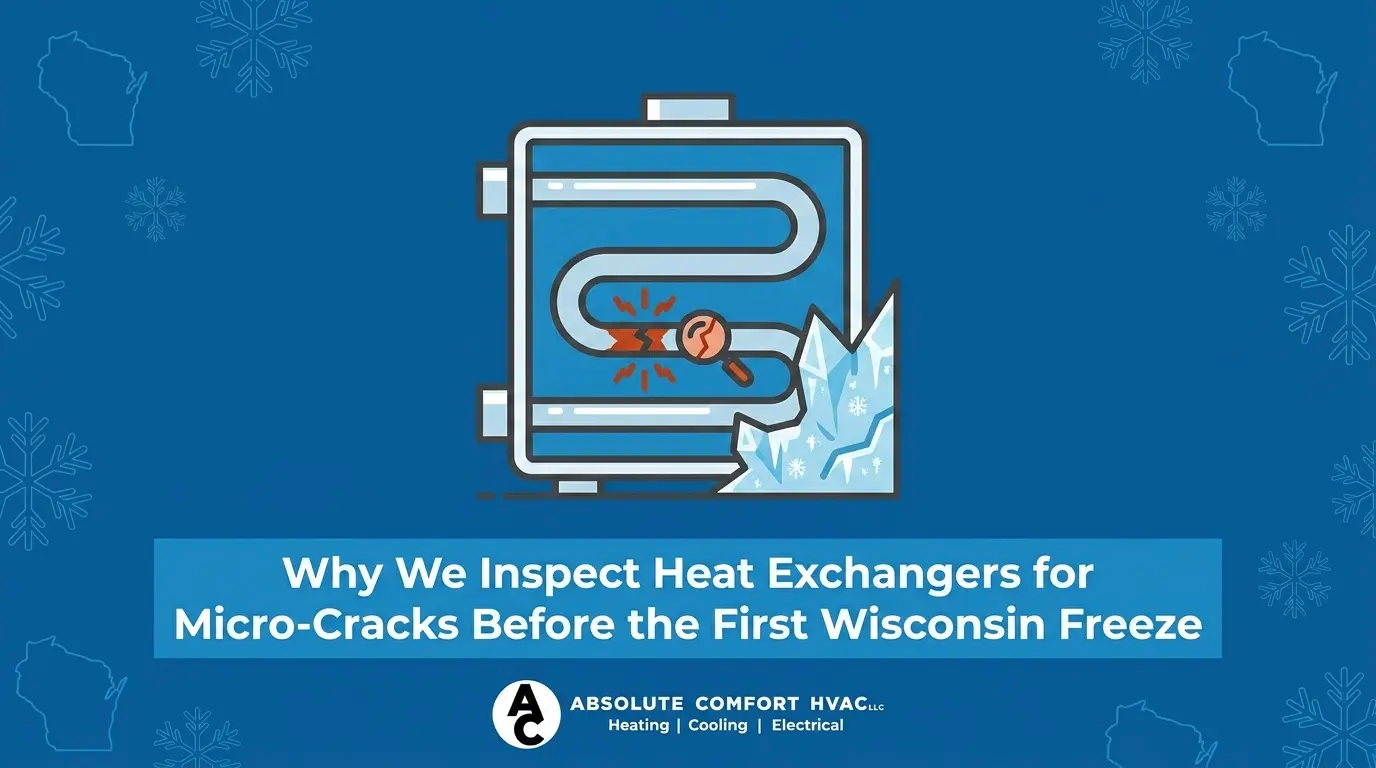
The heat exchanger is the absolute heart of your furnace. It acts as the primary, physical barrier between the toxic combustion gases created by burning fuel and the clean breathing air circulating through your home’s vents. Over years of use, this vital component can develop silent, invisible micro-cracks. Because these flaws start out microscopic, they easily go unnoticed by the untrained eye.
This is why tackling this inspection during the September pre-heating season is so urgent. Catching a compromised heat exchanger before the first hard freeze hits means you avoid forcing a damaged system to run constantly. Uncovering these hidden flaws requires advanced professional diagnostics, not just a casual glance with a flashlight. Understanding how these cracks form is the first step in protecting your home.
The Physics of Metal Fatigue: How Thermal Expansion Damages Equipment
To understand why heat exchangers fail, we have to look at the basic science of how metal reacts to extreme temperature changes. Every time your furnace kicks on to warm up your home, the burners ignite, generating intense heat. This process forces the metal of the heat exchanger to undergo rapid thermal expansion.
The Science of Thermal Stress
When metal heats up, its molecules vibrate faster and push apart, causing the entire component to physically expand. Once the heating cycle finishes and the burners shut off, the metal cools down and shrinks back to its original size. This constant cycle of expanding and contracting happens thousands of times every single winter.
The Paperclip Effect: Think of it like bending a metal paperclip back and forth. You can bend it a few times without any issue. But if you keep bending it in the exact same spot, the metal eventually suffers from fatigue, weakens, and snaps. Your heat exchanger experiences a very similar type of mechanical stress. Over thousands of heating cycles, this constant movement causes deep metal fatigue.
Age and Microscopic Vulnerabilities
Furnaces that are over 10 to 15 years old have a statistically higher risk of structural failure due to this cumulative stress. In our years of repairing heating equipment across the region, the Absolute Comfort HVAC team has seen firsthand how heavily homeowners in Waterford WI and surrounding areas rely on their systems. This means local furnaces rack up thermal cycles much faster than those in milder climates.
The most dangerous part of this process is that these stress fractures often start at a microscopic level. A micro-crack might be entirely invisible when the metal is cold and contracted. However, when the furnace fires up and the metal expands, that tiny crack stretches open. Because they are so small, detecting them is virtually impossible without specialized equipment, making proactive checks vital.

Carbon Monoxide: The Silent Danger of Invisible Cracks
A compromised heat exchanger isn’t just an efficiency problem; it is a severe health hazard. The primary job of the heat exchanger is to keep the exhaust gases safely contained while transferring their heat to the air blowing into your rooms. When a crack develops, that physical barrier is broken.
How Toxic Gases Escape
As the furnace heats up and the metal expands, those microscopic cracks open up. This allows combustion gases to mix directly with the clean air being circulated through the home. The most dangerous of these gases is carbon monoxide (CO). According to CDC data, carbon monoxide is a colorless, odorless, and tasteless gas that poses severe health risks, causing hundreds of non-fire-related incidents every year.
Because the crack only opens when the metal is hot, the furnace might only leak carbon monoxide during active operation. This makes the danger intermittent and incredibly difficult for a homeowner to notice without specialized tools.
Why Detectors Aren’t Enough
Many homeowners rely entirely on plug-in or battery-operated carbon monoxide detectors to keep them safe. While functional carbon monoxide detectors are a crucial secondary defense, they should never be your only strategy. By the time a standard ceiling or wall detector sounds an alarm, a significant amount of dangerous gas has already entered your living space.
Taking action during the September pre-heating season ensures you are employing proactive prevention as your primary safeguard. Stopping the leak before it ever starts is the only way to guarantee your indoor air remains safe and clean.
Why Sudden Temperature Drops Accelerate Furnace Wear
The regional climate plays a massive role in how quickly a heating system degrades. As local HVAC professionals, we know that in Wisconsin, the transition from late summer to late fall is rarely a gentle, gradual decline. Instead, we often experience sudden, extreme temperature drops that shock dormant heating systems into high gear overnight. Our technicians consistently see a spike in emergency calls right after that first freezing night.
The Shock of the First Freeze
When the weather shifts from a mild 55 degrees to a sudden, freezing night, your furnace is forced to go from completely dormant to running at maximum capacity. This rapid, continuous cycling heavily stresses the metal components. The heat exchanger has to heat up and cool down far more frequently, aggressively accelerating the metal fatigue we discussed earlier.
Regional heating systems in our area run for six or more months out of the year. This means a furnace in Wisconsin accumulates significantly more thermal cycles than the national average. All of that extra work means the metal is expanding and contracting thousands of extra times per season.
Preparing for the Workload
If your system has a microscopic flaw, the sudden stress of a hard freeze is exactly what will cause that flaw to rupture into a full crack. Preparing the system before this sudden workload hits is vital to prevent mid-winter breakdowns. Whether you are maintaining a standard unit or looking into upgrading furnace systems in Brookfield, ensuring the equipment can handle the extreme seasonal shift is critical for homeowners in Waterford WI and surrounding areas.
Visual Checks vs. Professional Diagnostics: Spotting the Unseen
It is a common misconception that anyone can simply look at a furnace and tell if it is safe to operate. A basic flashlight inspection of the furnace exterior will not reveal internal micro-cracks. Because the heat exchanger is buried deep inside the cabinet, and because the cracks are often microscopic when the metal is cold, a visual once-over is completely insufficient.
Comparing Inspection Methods
| Inspection Method | Tools Used | What It Catches | Safety Level |
|---|---|---|---|
| Basic Visual Check | Flashlight, naked eye | Obvious rust, large exterior soot marks, major structural breaks. | Low. Misses internal and microscopic stress fractures. |
| Standard Tune-Up | Multimeter, basic gauges | Electrical faults, dirty sensors, basic airflow issues. | Moderate. Good for efficiency, but often skips deep structural safety. |
| Diagnostic Safety Inspection | Combustion analyzer, flexible high-res borescope camera | Invisible micro-cracks, hidden exhaust leaks, internal weld failures. | High. Verifies the structural integrity of the barrier separating toxic gas from breathing air. |
The Value of Rigorous Diagnostics
Homeowners must never attempt to dismantle or test the heat exchanger themselves, as accessing these components requires a licensed professional and carries severe safety risks. Furthermore, a generic “checklist tune-up” offered by some contractors often skips the deep diagnostic work entirely.
This is where our rigorous, expert-level inspections make the difference. Over countless service calls throughout southeastern Wisconsin, we’ve learned that true family safety requires utilizing specialized diagnostic tools—like digital combustion analyzers and high-resolution inspection cameras—to catch microscopic hazards that other contractors simply miss. Scheduling this level of diagnostic care during the September pre-heating season ensures your system is structurally sound before the heavy winter lifting begins.
Observable Warning Signs of a Compromised Heating System
While you cannot see a micro-crack yourself, a failing heat exchanger will often produce secondary symptoms that you can observe. If you notice any of the following signs in your home, it indicates your system needs immediate professional attention.
- Yellow or dancing burner flames: A healthy gas furnace should produce a steady, bright blue flame. If the flame is yellow, flickering, or dancing erratically, it indicates improper combustion or a draft—often caused by air blowing through a crack in the heat exchanger.
- Excessive soot buildup: Keep an eye out for black, powdery soot accumulating around the furnace registers, the exterior cabinet, or near the burners. This is a strong sign that the fuel is not burning cleanly, which frequently accompanies a cracked heat exchanger.
- Strange, chemical odors: A compromised system can sometimes emit a formaldehyde-like smell or a sharp, metallic odor. If you smell something unusual when the heat kicks on, shut the system down immediately.
- Unusual rattling or clicking noises: Pay attention to the sounds your furnace makes shortly after the blower shuts off. If you hear persistent clicking, popping, or rattling, it can indicate cooling metal shifting and grinding around a structural crack.
If you spot these symptoms in Waterford WI and surrounding areas, do not ignore them. In our experience, these are prime indicators you need furnace replacement or immediate, high-level repair to secure your home’s air quality.
The Professional Inspection Process: Beyond the Basic Tune-Up
Demystifying what actually happens during a high-level safety inspection helps homeowners understand the real value of the service. When our Absolute Comfort HVAC technicians visit your home, a true diagnostic evaluation goes far beyond changing a filter and wiping down the cabinet.
Safe Shutdown and Isolation
The process begins with the safe shutdown and isolation of the heating system. The technician ensures all gas and electrical lines are secured before any internal panels are removed. This protects both the technician and your home during the diagnostic process.
Advanced Diagnostic Technology
Next, the technician utilizes digital combustion analysis. By inserting a specialized probe into the exhaust flue while the system is running, the analyzer measures the exact chemical makeup of the exhaust gases. If there is a hidden leak, the combustion readings will show anomalies that indicate oxygen or other gases are mixing where they shouldn’t be.
Following the combustion test, the technician will power down the unit and use a flexible borescope camera. This tiny, high-resolution camera is snaked deep into the heat exchanger’s chambers. It allows the technician to visually inspect the internal curves, blind spots, and welds of the metal—areas that are completely impossible to see with a flashlight.
Total Transparency
Once the inspection is complete, you receive a comprehensive safety report. This ensures total transparency about your system’s structural integrity. Getting this detailed breakdown during the September pre-heating season gives you peace of mind that your equipment is truly safe to operate.
Common Questions About Heat Exchanger Safety and Cracks
Homeowners in Waterford WI and surrounding areas often have questions when they learn about the risks of metal fatigue. Here are the most common concerns we hear regarding furnace safety and structural integrity.
What are the symptoms of a cracked heat exchanger?
The most observable symptoms include yellow or dancing burner flames, excessive soot accumulation around the unit, and unusual formaldehyde-like odors. You might also hear strange clicking or rattling noises as the unit cools down. If you notice any of these signs, shut off the furnace and call a professional immediately.
Why do heat exchangers crack?
Heat exchangers crack due to continuous thermal expansion and contraction over years of heating cycles, which causes deep metal fatigue. Every time the furnace heats up, the metal expands; when it cools, it shrinks. Over thousands of cycles, this repetitive stress eventually causes the metal to fracture.
Is a cracked heat exchanger dangerous?
Yes, a cracked heat exchanger is incredibly dangerous. It presents a severe risk of carbon monoxide and other toxic combustion gases leaking directly into your home’s breathing air. This is a major health hazard that requires immediate professional intervention.
Can a cracked heat exchanger be repaired?
No, a cracked heat exchanger cannot be safely patched or welded with DIY methods or temporary sealants. Because of the extreme thermal stress the metal endures, any patch will quickly fail. The component must be fully replaced by a professional, or, if the furnace is older, the entire unit should be replaced.
How long does a heat exchanger typically last?
Most heat exchangers are designed to last 15 to 20 years under normal conditions. However, living in a harsh winter climate that requires heavy, continuous use can significantly shorten this lifespan due to the increased number of thermal cycles the metal must endure.
Will a carbon monoxide detector catch a cracked heat exchanger?
A carbon monoxide detector will alert you if dangerous levels of gas reach the sensor, but it is a secondary line of defense. By the time the alarm sounds, the gas is already in your living space. Proactive inspections are the only way to catch a crack before it starts leaking gas into your home.
Protecting Your Home with Proactive Fall Diagnostics
Understanding the physics of metal fatigue empowers you to make safe, informed decisions about your home’s heating system. A furnace is a hard-working piece of machinery, and the extreme thermal stress it endures year after year takes a real toll on its structural integrity.
Catching micro-cracks early prevents dangerous mid-winter emergencies and protects your family from silent hazards like carbon monoxide. By scheduling a diagnostic evaluation during the September pre-heating season, you can address potential issues while temperatures are still mild. Don’t wait for the first hard freeze to test your system’s limits—taking proactive steps now ensures you can enjoy a warm, safe, and comfortable winter season.